
In this post, we will look at the best thermal monocular for hunting available on the market today. We will also look at some factors to consider when purchasing the device.
The Hunter’s night vision system is all about gaining an edge. The same applies to anyone who tracks wildlife, whether bird-watching, mouse hunting, or game management. In many cases, thermal imaging monoculars are the best option.
Many manufacturers make thermal monoculars. Generally, these makes and models use the same basic techniques to produce the same results.
However, not all thermal imaging monoculars are created equal. The differences in functionality, quality control, and customer support are also important factors.
This is a summary of the best scopes you can use for hunting.
| Monocular | Check Price |
| AGM Taipan V2 19-320
|
Amazon | Opticsplanet |
| Pulsar Axion XQ30
|
Amazon | Opticsplanet |
| ATN BlazeSeeker-207
|
Amazon | Opticsplanet |
| RIX Pocket K3
|
Amazon |
AGM ReachIR LRF 35-640
|
Amazon | OpticsPlanet |
| Pulsar Telos LRF XP50
|
Amazon |
Pulsar Helion XP  |
Amazon |
Kinsei  |
Amazon |
FLIR LS-X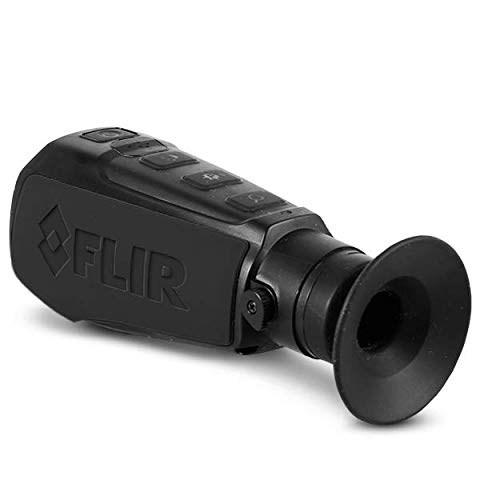 |
Amazon |
Leupold LTO |
Amazon |


Best Thermal Monoculars For Hunting -Reviews
1) AGM Global Vision Taipan V2 19-320

The AGM Global Vision Taipan V2 19-320 thermal monocular is a compact, budget-friendly option that works well for night hunting and scouting. This monocular strikes a nice balance for hunters wanting solid performance without spending top dollar
It uses a sensitive 320×256 resolution sensor (12 micron) with sub-35mK NETD performance, picking up clear heat signatures on animals like coyotes, hogs, or deer, even in fog, rain, or thick brush. The 19mm lens provides a base 3x magnification (with digital zoom up to 22.5x) and a detection range of up to around 950–1,038 yards for human-sized targets in good conditions.
The image stays smooth thanks to the 50Hz refresh rate, and you can choose from several color palettes to make targets stand out against different backgrounds. Digital zoom is handy for closer looks, but it works best at lower settings to keep details sharp. A major plus is the removable 18650 battery, which lasts about 6 hours on a charge. It includes 16GB storage for recording videos and photos, plus Wi-Fi to connect to your phone for quick sharing or live viewing through the AGM app.
Pros
- Clear detection with a sensitive 320×256 sensor
- Good range up to 1000 yards
- Removable battery with solid 6-hour runtime
- Built-in recording, Wi-Fi, and app connectivity
- Waterproof, rugged, and comfortable design
- Excellent value in the mid-range category
Cons
- Higher digital zoom softens image details
- Base 3x magnification may feel narrow for wide scanning
2) Pulsar Axion XQ30 Compact Monocular

What really sets the Pulsar Axion Compact apart is its size. It’s small enough to slip into a jacket pocket, yet tough enough to handle rough use in the field. Also, this monocular doesn’t try to impress with flashy extras, but instead focuses on doing the important things well.
The 384×288 thermal sensor provides a noticeable step up in detail compared to entry-level models, allowing for more confident detection and identification at practical hunting distances. Heat signatures stand out cleanly, even in light fog or uneven terrain, which is exactly what you want in real outdoor conditions.
The image refresh rate keeps movement smooth, so tracking a walking animal or scanning a wide area feels comfortable and realistic. Controls are simple and intuitive, making one-handed use easy, even with gloves on. Battery life holds up well during long sessions, and the fast startup means you’re never left waiting.
Pros
- Very compact and lightweight
- Clear and responsive thermal imaging
- Simple, user-friendly controls
- Durable outdoor construction
Cons
- Small display compared to larger units
- Digital zoom is limited
3) ATN BlazeSeeker-207 thermal monocular

The ATN BlazeSeeker-207 Thermal Imaging Monocular is for the hunter who wants something that’s budget-friendly, not because it lacks features, but because it’s functional and straightforward
The modest 256×192 thermal sensor does a good job of highlighting heat signatures clearly, making animals and people easy to spot in complete darkness. It delivers usable detail at practical distances, and the image remains clear enough for scanning fields, tree lines, or trails.
Its 1–8.8x digital zoom gives you flexibility, letting you switch from wide-area scanning to closer inspection when something catches your eye. Despite the zoom range, the image stays stable and easy to follow, especially at lower magnifications. The monocular is lightweight and compact, making it comfortable to carry during long outings. Controls are simple and laid out in a way that’s easy to learn, even for first-time thermal users. Battery life is respectable for extended sessions, and the rugged housing holds up well outdoors.
Pros
- Clear thermal detection for its class
- Wide 1–8.8x zoom range
- Compact and lightweight design
- Simple, beginner-friendly controls
Cons
- Lower resolution than premium models
- Image softens at higher zoom levels
4) RIX Pocket K3 Portable Thermal Monocular

The RIX Pocket K3 portable thermal monocular is a compact device that features a 384×288 VOx uncooled sensor with a 12µm pixel pitch and impressive sub-25mK NETD sensitivity, delivering clear detection of heat signatures even in challenging low-contrast conditions. The 50Hz refresh rate ensures smooth imaging during panning. At the same time, the inclusion of Electronic Image Stabilization (EIS), a rare feature in this price range, greatly reduces handheld shake, making it practical for extended scouting sessions.
Weighing under half a pound and small enough to fit easily in a pocket, the K3 prioritizes true portability without sacrificing core performance. The 15mm objective lens, paired with 2x optical magnification, provides a wide field of view suitable for both close-range observation and longer-distance detection, with manufacturers claiming a range of up to approximately 780–850 meters for human-sized targets. The crisp 800×600 OLED display offers multiple color palettes for adapting to various environments, from open fields to dense brush.
Additional conveniences include built-in 8GB storage for photo/video recording, Wi-Fi connectivity for app integration and live streaming, and an IP67 rating for reliable performance in rain, dust, or rough handling. Battery life proves dependable with the replaceable 18650 lithium-ion cell, typically providing 5–7 hours of continuous use, and spares remain inexpensive and widely available.
Pros
- Ultra-compact and lightweight
- High thermal sensitivity
- Smooth 50Hz refresh rate with valuable EIS stabilization
- Solid battery life (5–7 hours) with replaceable 18650
- IP67 waterproof/dustproof and rugged
- Built-in recording, Wi-Fi, and strong budget value
Cons
- Digital zoom (beyond 2x) significantly reduces image clarity
- Not ideal for precise long-range identification
5) AGM Global Vision ReachIR LRF 35-640

The AGM Global Vision ReachIR LRF 35-640 is a strong thermal monocular built for serious night hunting. It features a high-resolution 640×512 VOx sensor that picks up heat very clearly, even through fog, dust, rain, or thick brush. This makes it easy to spot animals like coyotes, hogs, or deer from far away. The 35mm lens gives a good wide view for scanning, with a 2x zoom that you can increase digitally if needed.
The display is sharp and bright, with different color options to make animals stand out against trees, grass, or open fields. A big plus is the built-in laser rangefinder that measures distance up to about 1,000 meters accurately, very helpful for knowing exactly how far away your target is before planning a shot.
It has plenty of storage for recording videos and photos, plus Wi-Fi to send files to your phone quickly. The body is tough, fully waterproof, and dustproof, so it handles bad weather and rough use well. The battery lasts around 4 to 4.5 hours and is easy to swap out with a spare.
Pros
- Very clear heat detection, even in tough weather
- Built-in rangefinder up to 1,000 meters
- Sharp, bright display with easy color choices
- Records video/photos with Wi-Fi sharing
- Tough, waterproof, and dustproof build
- Replaceable battery
Cons
- Battery lasts modestly 4–4.5 hours
- Bigger and heavier than tiny pocket models
6) Pulsar Telos LRF XP50

The Telos is a lineup of monoculars with different sensor sizes and capabilities. The LRF XP50 combines top-tier image clarity with rugged dependability. At its core is a high-resolution thermal sensor (640 x 480 pixels) paired with a 1024 x 768 AMOLED display, delivering crisp, detailed images even in pitch darkness or through fog, rain, or brush.
Its integrated laser rangefinder provides precise distance readings up to 1,800 meters, which is invaluable for both scouting and shot placement. The device also supports variable magnification (2.5–10×), providing flexibility for both close and long-range observation.
With Wi-Fi integration and onboard video recording, hunters can document their outings or stream live. Its ergonomic design, coupled with a nonslip rubber-coated housing for secure handling and an IPX7 waterproof rating, makes it reliable under harsh outdoor conditions.
While not budget-friendly, the Telos LRF is a professional-grade tool for hunters who demand the best.
Pros
- Exceptional image clarity with high-resolution AMOLED display
- Long detection range (up to 1,800 m)
- Integrated laser rangefinder for accuracy
- Rugged, waterproof (IPX7) design
- Wi-Fi streaming and video recording capabilities
Cons
- Pricey, not ideal for budget hunters
- Shorter battery life than some competitors when recording
7) Pulsar Helion XP Thermal Monocular
The Helion XP thermal imaging monocular is based on IR sensor (uncooled microbolometer) technology and is available in several models with varying frame rates, magnifications, and lens diameters.
The new Pulsar Helion thermal imaging monocular has powerful imaging capabilities with internal recording and Wi-Fi output. It works with all models, whether you pair it with your phone or notepad for a larger screen.
Pulsar Helion Thermal Imaging Monoculars offer the latest in thermal imaging technology to give you the best image clarity combined with the best supporting technology and software so you can get the most out of it.
The Pulsar Helion Thermal imager is compact to carry and a convenient option for those who already own a thermal imager; it is easier to scan with thermal imaging monoculars like the Helion, as it is lighter and safer.
The Pulsar Helion thermal imaging monocular features a high refresh rate of 50Hz for a comfortable viewing experience for dynamic and fast-moving action.
The Helion XP series also features interchangeable lenses, so you can start with one Helion and adjust it to suit your needs.
With the Pulsar Helion Thermal with IPX7 waterproof protection rating, it ensures your Pulsar Helion Thermal Monocular will perform well in wet weather, during heavy rain, snowfall, and submersion up to 3 feet deep.
Pros
- Internal recording
- Interchangeable lenses
- A refresh rate of 50Hz
Cons
- Pricey
8) Kinsei Thermal Imaging Monocular

Although available at a budget price, one will be mesmerized by this device’s performance as well as features. The Kinsei stands out when it comes to value.
The monocular uses a thermal sensor with a resolution of either 256×192 or 400×300 effective pixels. These resolutions allow for clear thermal images that can detect vehicles at 279-455 yards and animals at 107-155 yards.
A lot of users have praised its decent image quality, displayed on a 0.2-inch 720×540 LCOS display, even matching some of the more expensive alternatives on the market. The monocular carries a sleek modern design. In addition, it is durable with an IP67 rating for water resistance.
The battery will last for around 9 hours, while the interface is user-friendly, with quick access to different modes. Users will also be pleased with its 2-year warranty.
Pros
- Budget-friendly
- Compact and lightweight design
- Up to 9 years of battery life
- 4 different color palettes for viewing
- Commendable Image quality
Cons
- Some users complain of inadequate user’s manual
9) FLIR LS-X Thermal Monocular
The FLIR LS-X Thermal Monocular is a handheld thermal imaging device designed primarily for law enforcement professionals but valuable for anyone. You can view, record, or transmit images and videos of heat signatures through fog, smoke, and foliage during the day or night.
At the heart of the device is a 336×256 Vox uncooled micro-bolometer that operates at a 60Hz refresh rate at room temperature.
The camera features a 19mm lens with a 17×13” field of view, 2-4x digital zoom, and many color palettes and digital enhancements, such as FLIR’s proprietary Digital Detail Enhancement.
You can watch landscapes on the built-in 640×480 LCD monitor or stream 640×512 pixel NTSC or PAL video to external monitors and recorders. To enhance the user experience, monocular provides a simple but effective control panel and a view menu.
The thermal imaging device is housed in a lightweight, durable and ergonomic polymer body. Its rubber overlay provides a non-slip grip, and its rubber eyecup provides comfort and protects the eyepiece optics from rain and snow.
Pros
- 19mm lens, 17×13” field of view
- 2-4x digital zoom
- 60 Hz refresh rate
Cons
- Learning curve
10) Leupold LTO Tracker 2HD Thermal Monocular
Understanding your surroundings requires not only skill but also the right tools. The Leopold LTO-Tracker 2 HD is the next evolution in thermal energy, allowing you to see through the dark, track animals, assist in search and rescue, or any other task where identifying heat sources might come in handy.
The LTO-Tracker 2HD features a new Beacon Mode, quickly recalibrating the screen for improved daytime use. This makes it easier to identify objects with similar thermal signatures to the background – like a fallen deer on a sunny hillside.
Leopold introduced modern waterproofing and anti-fog technology, using advanced internal gas and sealing methods to withstand extreme temperatures and altitude changes, so the optics’ internal components can remain moisture-free and crystal-clear.
With an all-aluminum body, only 5.5 inches long and 7 ounces, it is ready to go on your next adventure.
Pros
- Waterproof and fog proof
- Beacon Mode
- Aluminum housing
Cons
- Pricey
Considerations When Buying a Thermal Monocular For Hunting
In this section, we will share some of the factors you need to consider when buying the best thermal monocular for hunting. The main aim of this section is to help you narrow down your search further.
Here are the important features:
Thermal Resolution
Since a thermal monocular can detect thermal signals through its thermal sensor, the resolution of this thermal sensor should be of high quality.
The greater your thermal resolution, the more sensitive the thermal monocular resulting in superior image quality.
Amateur-grade thermal monoculars have a resolution of about 160×120, while mid-range monoculars can spot a 384×288 thermal sensor. The best thermal imaging monoculars have a loud 640×480 quality.
Magnification
Most thermal imaging monoculars offer a magnification function. However, thermal amplification works differently from other precision scopes. Thermal scopes tend to become distorted or pixelated when you zoom in. Therefore, most do not have as high a magnification as actual glass.
The scaling method is also important. It can be digital, optical, or a combination of both. A good example of a digital zoom device is a smartphone camera. It is suitable for close-range targets.
Display Resolution
Thermal imaging monoculars must also have good LCD resolution to discern images easily. it is generally better than thermal resolution, with the best screens represented by 1280×720 pixels. Thermal resolution is scaled up to fit the glove on the LCD.
Refresh Rate
The refresh rate is the rate at which the display is refreshed. The unit for measuring refresh rate is called hertz.
A faster refresh rate means you can see faster-moving games with minimal image blur. This also means that the image is more or less stable. 9Hz, 30Hz, 50Hz, and 60Hz are very common refresh rates in thermal imaging monoculars with a refresh rate of 30Hz or higher. This makes it easier to identify targets and gives you a clear image.
Durability
The most important thing in buying anything is durability. Durability is a fundamental buying consideration for your thermal monocular. Thermal imaging monoculars must be durable due to the play area’s stress, pressure, and weather conditions.
The durability of thermal monoculars depends on sturdy construction and waterproofing. It is also important to the operating temperature range of the function. These features cost more, and you have cheaper options, but none of these are reliable.
Thermal monoculars with strong, lightweight construction can last for decades. Cheaper ones may be attractive, but you are spending an expensive thermal monocular once; it’s a long-term investment.
Power and Battery
Whatever the characteristics of a monocular, it is utterly useless without the proper power source. Imagine running out of time during a critical phase of your hunting expedition. Annoying!
One thing to note: Wi-Fi and Bluetooth connections can drain the battery faster. So make sure the battery life of the device you choose is good enough for your purposes. About 7 to 10 hours of battery life is sufficient for most uses.
See Also
Frequently Asked Questions (FAQs)
These are the commonly asked questions regarding thermal monoculars and how they can be used when hunting
Which is better for hunting, night vision or thermal?
Night vision and thermal imaging have distinct advantages and limitations. One of the primary benefits of night vision is that it displays an actual image rather than a thermogram, making it easier to identify targets. Thermal is also more expensive than night vision.
As a hunter, however, I favor thermal imaging because it can detect easily concealed targets and operates even in severe weather conditions. Furthermore, it can be used during the day with no problems.
What is the best compact thermal imaging monocular for hunting?
The ATN BlazeTrek-619 is probably one of the most valuable monoculars to buy on the market today. It’s compact and features a potent 640×512 pixel sensor. Additionally, numerous advanced features at a reasonable price.
Conclusion
In this post, we will share the best thermal monoculars for hunting. We have also shared some of the important aspects to consider when buying a hunting monocular.
Thermal monoculars are great tools to help you in various outdoor situations. In addition, it is also adequate for security purposes and search and rescue operations.
The choice of equipment will depend on your usage level and budget. Remember, the best thermal vision technology is expensive. So make sure you choose a reliable brand with a good reputation.
We hope our review helped you understand what makes a good value thermal monocular. You should use this information to find the best thermal monocular for your investment.
See Also